
In today's pursuit of efficient and precise production, non-destructive testing technology has become an indispensable part of industrial quality control. Among these technologies, eddy current non-destructive testing is playing an increasingly important role in fields such as automotive manufacturing, aerospace, and rail transit due to its unique advantages. This article will delve into the core principles, market applications, and development trends of this technology.
Eddy Current Testing utilizes electromagnetic induction principles to detect surface and near-surface defects by analyzing the changes in induced eddy currents within conductive materials. This technology has several significant advantages: 1. Non-contact testing: No need to directly contact the surface being tested, avoiding damage to the workpiece. 2. Fast detection speed: Scanning speeds can reach over hundreds of meters per minute, meeting the needs of online testing. 3. No coupling agent needed: Unlike ultrasonic testing, it can test dry surfaces or coated workpieces. 4. Multi-parameter detection: It can simultaneously evaluate multiple characteristics such as material defects, hardness, and conductivity. These advantages make eddy current testing the preferred solution for detecting surface defects in conductive materials.
Currently, eddy current non-destructive testing is mainly applied in: 1. Metal pipe and rod testing
Seamless steel pipe surface crack detection
Aluminum alloy rod surface defect detection
Copper pipe eddy current flaw detection
2. Automotive component testing
Engine component crack detection
Wheel hub flaw detection
Steering system component testing
3. Aerospace field
Aircraft engine blade testing
Fuselage skin inspection
Landing gear component flaw detection
4. New energy industry
Lithium battery electrode sheet testing
Wind turbine blade bolt flaw detection
Solar bracket testing
The latest application data shows that after adopting intelligent eddy current testing systems, the average product defect rate in enterprises can be reduced by 67%, and production efficiency can be increased by more than 30%.
In the coming years, eddy current non-destructive testing technology will develop in several directions:
1. Intelligent Upgrades
AI algorithms assisting in defect recognition
Automated defect classification systems
Intelligent data analysis platforms
2. Array Probe Technology
Omnidirectional eddy current probes
Flexible array probes
3D imaging detection
3. Online Testing Systems
Breakthroughs in high-speed scanning technology
Optimization of production line integration solutions
Real-time quality feedback systems
4. Development of Specialized Equipment
Special flaw detectors for new energy vehicle components
Composite material testing solutions
Micro-component detection technology
As manufacturing's quality control requirements continue to rise, eddy current testing technology will have broader development prospects. It is expected that by 2025, the global eddy current testing equipment market size will reach 2.87 billion USD, with a stable compound annual growth rate of about 6.5%.
When choosing eddy current testing equipment, enterprises should focus on the following dimensions:
1. Testing requirements
Type of material to be tested (steel, aluminum, copper, etc.)
Desired defect size to be detected (micron or millimeter level)
Detection rhythm requirements (offline or online testing)
2. Equipment performance
Detection frequency range
Probe resolution
Signal-to-noise ratio level
3. System integration
Degree of mechanical automation
Data management systems
Alarm handling mechanisms
4. Follow-up services
Level of technical support
Capability of spare parts supply
Product updates and iterations
It is recommended that enterprises conduct sufficient process testing before purchasing to ensure the detection system matches actual production needs. Attention should also be paid to the scalability of the equipment, leaving room for future development. As manufacturing develops with high quality, the application prospects of eddy current non-destructive testing technology will be broader. This technology can not only help enterprises improve product quality but also assist the entire industry in achieving quality upgrades. Deep understanding and reasonable application of eddy current testing technology will undoubtedly bring a qualitative leap in quality control for enterprises.
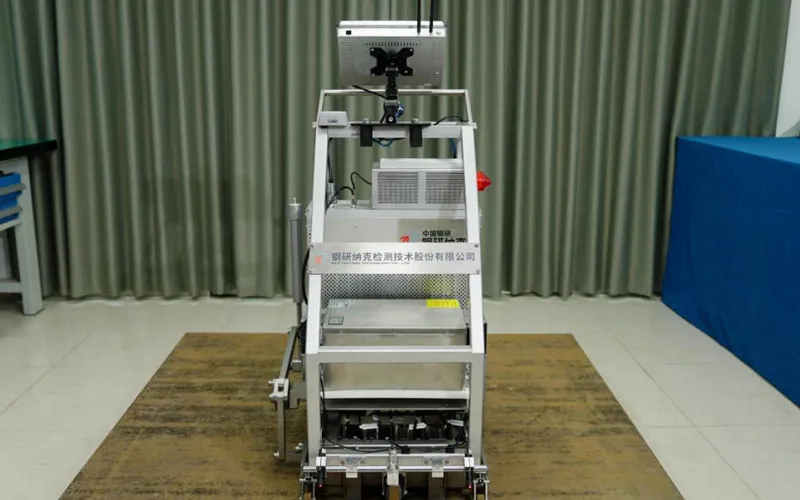
NCS-MMTI200 steel plate hard spot micro-magnetic NDT trolley system
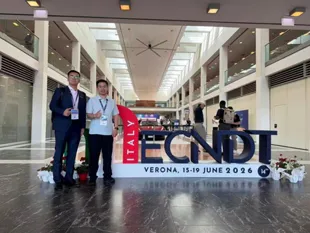
NCS Exhibits Automated NDT Equipment and NDT Instrument Calibration Systems at ECNDT 2026
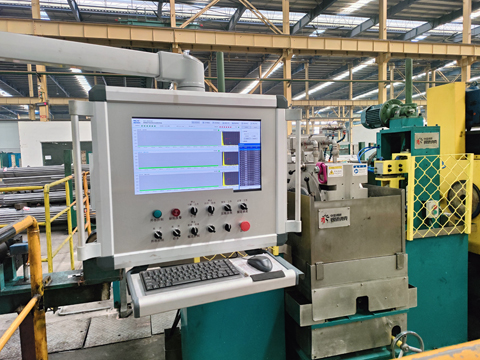
What Is Phased Array Pipe Inspection? Complete 2026 Guide to Phased Array Ultrasonic Testing for Pipes & Bars
 English