
In industries such as petrochemical, long-distance pipelines, and boiler manufacturing, the quality of non-destructive testing of welding joints is directly related to the safe operation of equipment. Traditional ultrasonic testing (UT) is limited by single-point detection efficiency, while rotary ultrasonic testing (Rotary UT) equipment, with its automation and full coverage, is becoming a new benchmark in industrial testing.
Compared with conventional manual UT testing, rotary ultrasonic equipment, through electromechanical integration design, achieves a high-precision, high-efficiency, and high-reliability testing solution:
Fully Automatic Testing
360° rotating probe achieves full coverage of weld seams with scanning speeds of up to 1.5-3 meters/minute, far exceeding manual operation efficiency. Real-time storage of test data supports traceability analysis.
Higher Detection Precision
Options for Phased Array (PAUT) or Multi-Modal Ultrasound (TOFD/Conventional UT) capable of identifying defects such as 0.5mm cracks and lack of fusion. Suitable for thick-wall pipes (8-100mm) and irregular weld inspections.
Intelligent Data Analysis
Real-time imaging (B/C/D scan) assists in defect assessment. AI algorithms automatically classify defect types (pores, slag inclusion, cracks, etc.). Automatically generates standardized test reports in compliance with ASME/API/GB standards. Industry data indicates that companies using rotary ultrasonic equipment have an average increase of 300% in detection efficiency, while the missed detection rate decreases by over 60%.
Fully automatic detection of circumferential welds in long-distance oil and gas pipelines (onshore/subsea pipelines), corrosion monitoring of in-service pipelines, and quality assessment of station pipeline weld joints.
Chemical pressure vessel thick-wall container longitudinal/circumferential weld inspection, flaw detection of head-to-shell welds, and automated testing in high-temperature and high-pressure environments.
New energy sector wind turbine tower weld inspection, hydrogen storage tank manufacturing quality control, and long-term monitoring of nuclear power pipeline welds.
Rail transit and shipbuilding high-speed rail bogie welding quality inspection, automated UT of hull panel welds, and corrosion scanning of storage tank floors. For example, a multinational oil service company, after adopting rotary UT equipment, reduced the inspection cycle of a single 50km pipeline from 30 days to 9 days, while the detection rate increased by 40%.
1. Multi-modal Fusion Detection: Rotary UT + Electromagnetic Ultrasound (EMAT) joint detection, Phased Array (PAUT) + TOFD composite technology, and collaboration with X-ray digital imaging (DR).
2. Intelligent Upgrades: AI automated defect assessment system (reduces human error), digital twin-assisted testing scheme formulation, and cloud data management with predictive maintenance.
3. Lightweight and Adaptability Enhancement: Crawling robots equipped with rotary UT (adaptable to complex conditions), compact design (suitable for narrow space operations), and waterproof and explosion-proof versions (for use in explosion-proof areas of chemical plants). According to Market Research Future, the global rotary ultrasonic testing equipment market is projected to exceed 820 million USD by 2026, with a compound growth rate of 9.3%, widely used in high-risk industries such as energy and chemical.
When purchasing, enterprises need to focus on the following key indicators:
Detection Capability
Applicable weld types (straight seam/spiral seam/fillet weld), maximum detection wall thickness (support for ultra-thick wall pipes), compliance with international standards such as ASME B31.3/API 1104.
Degree of Automation
Automatic tracking of weld seams (laser/vision navigation), feasibility of remote control (operation in hazardous areas), automatic data storage, and export formats.
Supplier Support
Localized technical service teams, customized testing scheme design, long-term equipment maintenance, and software upgrades.
The popularization of rotary ultrasonic testing equipment marks a move towards higher levels of automation and intelligence in industrial non-destructive testing. In the future, with the deep integration of AI and robotics technology, this technology will become an "intelligent quality inspection expert" ensuring the safe operation of key facilities. Investing in rotary UT equipment is not only a wise choice to enhance testing efficiency but also an important step in achieving digital transformation.
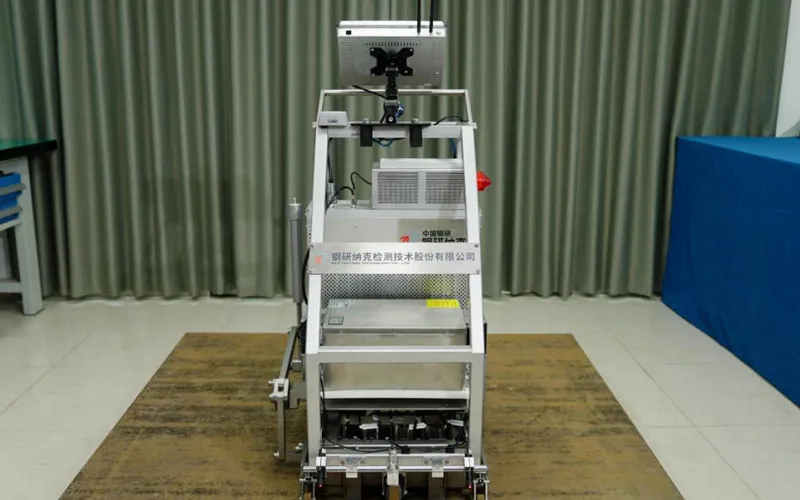
NCS-MMTI200 steel plate hard spot micro-magnetic NDT trolley system

NCS Exhibits Automated NDT Equipment and NDT Instrument Calibration Systems at ECNDT 2026
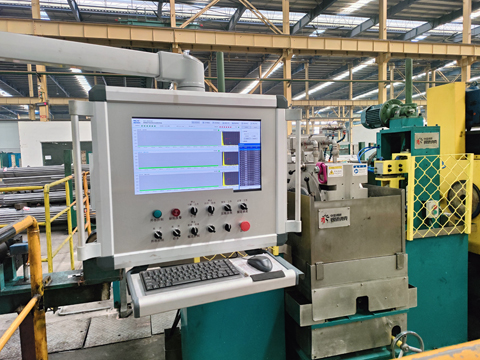
What Is Phased Array Pipe Inspection? Complete 2026 Guide to Phased Array Ultrasonic Testing for Pipes & Bars
 English